How Developmental Signals Can Contribute to Genomic Mosaicism
Heidelberg researchers identify biological mechanism that protects against, but can also trigger, errors in the genome

Certain developmental signals shape not only the human embryo but also play a significant role in maintaining our genetic blueprints. They prevent alterations in the genome, known as mosaicism. An international research team led by scientists of the Centre for Organismal Studies of Heidelberg University made this discovery in investigations using stem cells. The underlying biological mechanism helps the DNA to produce an identical copy of itself during cell division using the original genetic blueprint. However, it can also contribute to genomic mosaicism during nerve cell development, according to the researchers, who analyzed tens of thousands of stem cell divisions.
The human body consists of trillions of cells that all have the same genetic blueprint and replicate themselves from a single fertilized egg, i.e., replicate and segregate division after division. “Over the course of our lives, cell mutations or other genomic alterations can arise due to errors in the underlying processes or the effect of mutagens in some cells. This creates mosaicism in our body,” explains Dr. Anchel de Jaime-Soguero, a postdoctoral researcher in the team led by Prof. Dr. Sergio P. Acebrón at the Centre for Organismal Studies of Heidelberg University. This genomic mosaicism describes the existence of cell lines with different genetic information, which can lead to serious disorders or diseases.
“In embryonic development, there are two critical bottlenecks for maintaining the genome,” states Dr. de Jaime-Soguero. Early human embryos often accumulate major alterations in their genome, including the loss or gain of whole chromosomes, which is the leading cause of miscarriage. Furthermore, explosive neurogenesis in the developing brain can be accompanied by widespread genomic alterations that can contribute to neurodevelopmental disorders. What biological processes underlie the temporal and spatial formation of mosaicism has remained largely unknown.
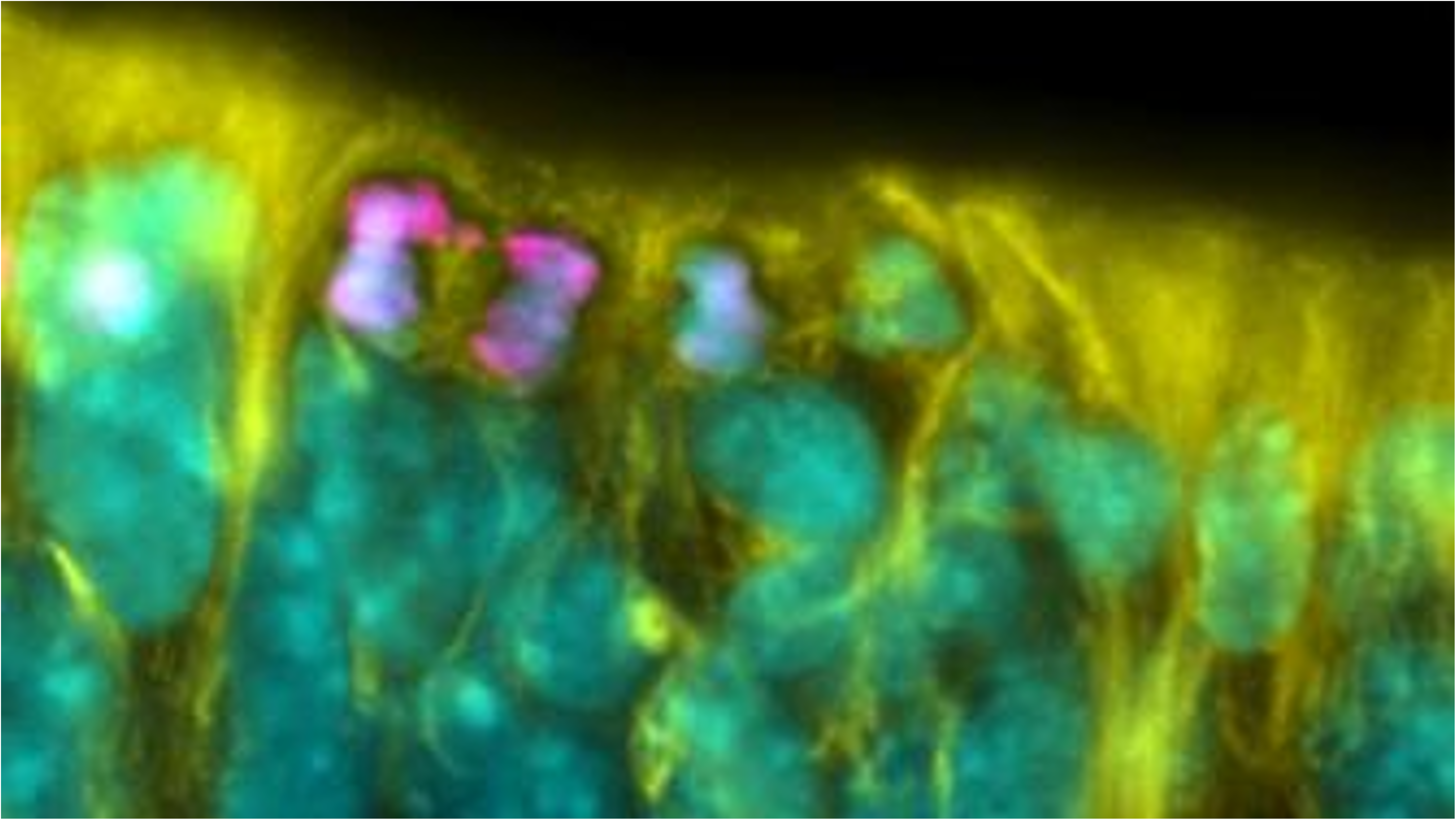
For their investigations, the researchers used pluripotent stem cells that are able to develop into nearly any type of cell in the organism. Using high-resolution imaging processes, they analyzed tens of thousands of stem cell divisions. Prof. Acebrón’s team was able to prove that the molecular signals that contribute to embryonic development and protect against errors in the genome of stem cells can also trigger mosaicism. Whether these different developmental signals, in particular WNT, BMP, and FGF, assume one or the other function, depends on where they are active in the early stages of embryonic development, the researchers report.
The researchers also determined that the underlying regulatory mechanism functions like a brake or gas pedal for the replication dynamics of DNA. Beyond pluripotency, most embryonic cell types are “insensitive” to this mechanism – with the exception of neural stem cells, which generate nerve cells. In their experiments with human and mouse neural stem cells, the researchers found that the same signal that induces neurogenesis is also responsible for the high levels of chromosome segregation errors. “We think that this biological mechanism is a critical piece of a puzzle to understand how mosaicism arises during early embryonic development,” states Prof. Acebrón.
This research work was incorporated into Heidelberg University’s Collaborative Research Center SFB 1324, “Mechanisms and Functions of Wnt Signaling”. Researchers from the University of Göttingen, the European Molecular Biology Laboratory and the German Cancer Research Center in Heidelberg as well as scientists from Great Britain, the Netherlands, and Sweden also contributed to the work. Funding was provided by the German Research Foundation, the Alexander von Humboldt Foundation, the German Academic Scholarship Foundation, the Chica and Heinz Schaller Foundation and UK Research and Innovation. The results were published in the journal “Nature Communications”.
Original publication
A. de Jaime-Soguero, J. Hattemer, A. Bufe, A. Haas, J. van den Berg, V. van Batenburg, B. Das, B. di Marco, S. Androulaki, N. Böhly, J. J. M. Landry, B. Schoell, V. S. Rosa, L. Villacorta, Y. Baskan, M. Trapp, V. Benes, A. Chabes, M. Shahbazi, A. Jauch, U. Engel, A. Patrizi, R. Sotillo, A. van Oudenaarden, J. Bageritz, J. Alfonso, H. Bastians & S. P. Acebrón: Developmental signals control chromosome segregation fidelity during pluripotency and neurogenesis by modulating replicative stress. Nature Communications (28 August 2024)